


Precautions for Epoxy Resin Vacuum Casting of HV Transformers and Instrument Transformers
2026-06-22 16:40:38Epoxy resin vacuum casting is a key process in the manufacture of high‑voltage transformers and instrument transformers. It ensures that the insulating material uniformly fills the gaps between the coils and the mould, and after curing forms a dense insulation structure that guarantees long‑term safety and stability under high‑voltage operation. Each stage of the process—material handling, mould preparation, vacuum control, pouring, and curing—deserves attention. The following practical points offer a general guide for those involved in this work.
1. Material Handling and Preparation
The epoxy resin, hardener, and fillers are not ready to use straight from the container; they require proper treatment beforehand. Moisture content is a primary concern. If these materials absorb moisture, the water will vaporise under vacuum and remain as voids or weak spots in the cured insulation. Therefore, materials should be stored in a dry, well‑ventilated area. Once a container is opened, it is best to use its contents promptly; if any material is left over, it must be resealed tightly. Before use, resin and fillers are typically preheated to drive off any absorbed moisture. At the same time, mechanical impurities that may have entered the materials should be removed by filtration, ensuring that the final mixture is clean and homogeneous.
2. Preheating the Mould and the Coil
Preheating the mould and the coil is often overlooked, yet it has a considerable effect on product quality. If the mould is cold, the hot resin will cool too quickly upon contact, reducing its flowability and preventing it from reaching narrow gaps. Similarly, if the coil contains residual moisture or solvent, that moisture will evaporate when it meets the hot resin, creating bubbles inside the casting. To avoid these problems, the mould and coil are normally placed in an oven and heated to a suitable temperature for a sufficient time to ensure even warmth throughout. Once preheated, the coil should be loaded into the mould and cast without long delays, so that it does not re‑absorb moisture from the air. The general goal is to bring the mould, coil, and resin to similar temperatures, thereby minimising the adverse effects of temperature differences.
3. Establishing the Vacuum Environment
The vacuum chamber is what distinguishes vacuum casting from ordinary open‑pouring methods. Under a high vacuum, dissolved gases and entrained air are drawn out of the material, and the resin can penetrate more easily into the fine spaces between coil turns and layers. During evacuation, it is important to monitor both the rate at which vacuum is drawn and the final level achieved. Poor sealing or worn vacuum pumps will fail to remove bubbles effectively. At the same time, excessive vacuum may cause lighter components in the resin formulation to evaporate, altering the intended mixture ratios. After reaching the required vacuum level, it is common to hold that condition for a while to allow thorough degassing before pouring begins.
4. The Pouring Operation
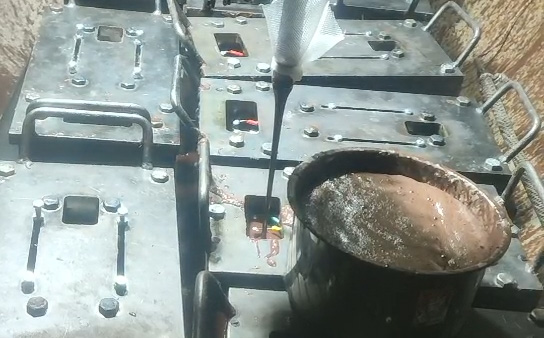
Pouring is the most visible step and often the one that demands the greatest practical skill. The resin should flow at a moderate rate—not so fast that it creates turbulence and traps air, and not so slow that it begins to gel before the mould is filled. A typical approach is to direct the resin along the inner wall of the mould, allowing the liquid level to rise smoothly and push the air out progressively. Some manufacturers introduce a protective insulating gas into the chamber after evacuation, raising the pressure slightly before pouring. This helps the gas fill any complex cavities that the resin might not otherwise reach, thus improving the final insulation performance. After pouring, a short secondary vacuum hold is sometimes applied to remove any remaining fine bubbles from the resin mass.
5. Curing and Post‑Curing
Once the resin is poured, the work is not finished simply by leaving it to harden. Curing is the phase in which the resin transitions from liquid to solid, during which chemical shrinkage occurs and heat is released. If the temperature is raised too quickly or set too high, the internal stresses that develop may cause micro‑cracks. Under high voltage, these tiny cracks can grow over time and eventually lead to insulation failure. For this reason, a stepped heating schedule is usually adopted: the resin is first gelled at a moderate temperature, then the temperature is gradually increased to complete the reaction. This slow approach allows stresses to relax. The entire curing cycle must be long enough to ensure that the resin is fully reacted, achieving the required mechanical strength and electrical properties. After curing, the mould should be allowed to cool gradually to room temperature before demoulding, so that thermal shock does not introduce new stresses.
6. Common Defects and How to Avoid Them
In vacuum casting practice, the most frequent quality issues are residual bubbles, surface cracks, and excessive partial discharge. Bubbles are typically traced to moisture in the materials, insufficient vacuum, or improper pouring speed. Cracks are most often caused by an unsuitable curing temperature profile or too‑rapid cooling. High partial discharge readings usually indicate internal voids or contaminants within the insulation. Prevention is far more effective than repair. Strict control over material acceptance and pretreatment, regular checks on the vacuum system’s condition, and faithful adherence to the specified temperature and time settings are the foundations of good quality. Detailed records for each batch are also valuable, as they help identify the root cause if problems arise and allow corrective action to be taken promptly.
7. Environmental Conditions in the Workshop
The workshop environment itself plays a significant role in casting quality. High humidity can introduce moisture into the materials, while low temperatures increase resin viscosity, impairing flow and filling. Dust and airborne particles, if they settle into the resin, become permanent impurities within the insulation. Therefore, the casting area should be kept clean, and it is advisable to install temperature and humidity control equipment. Operators should wear anti‑static clothing and appropriate protective gear—not only for their own safety but also to reduce the risk of contaminating the casting with foreign matter.
Each step in epoxy resin vacuum casting connects with the others, and a minor oversight at any stage can compromise the insulation performance and service life of the finished product. For high‑voltage transformers and instrument transformers, where reliability is paramount, consistent attention to process details, regular observation, and thorough record‑keeping are essential to maintain stable, long‑term quality.