


Precision PU Potting Machines – Selection Guide & Buyer's Handbook
2026-08-14 16:17:29PU Potting Machine: Selection Starts with Material, Configuration Follows the Process
Why Automate PU Potting?
Polyurethane (PU) materials demand tight process control. The isocyanate component (Part A) is moisture-sensitive, while the polyol component (Part B) tends to settle over time. Even slight deviations in mixing ratio or temperature can compromise cured hardness, adhesion strength, and dielectric performance.
Manual mixing and dispensing introduce too many variables—batch consistency suffers, and the solvent cleanup process is both hazardous and labor-intensive.
A PU potting machine addresses three core challenges: accurate ratio control, thorough mixing, and stable temperature management throughout the process.
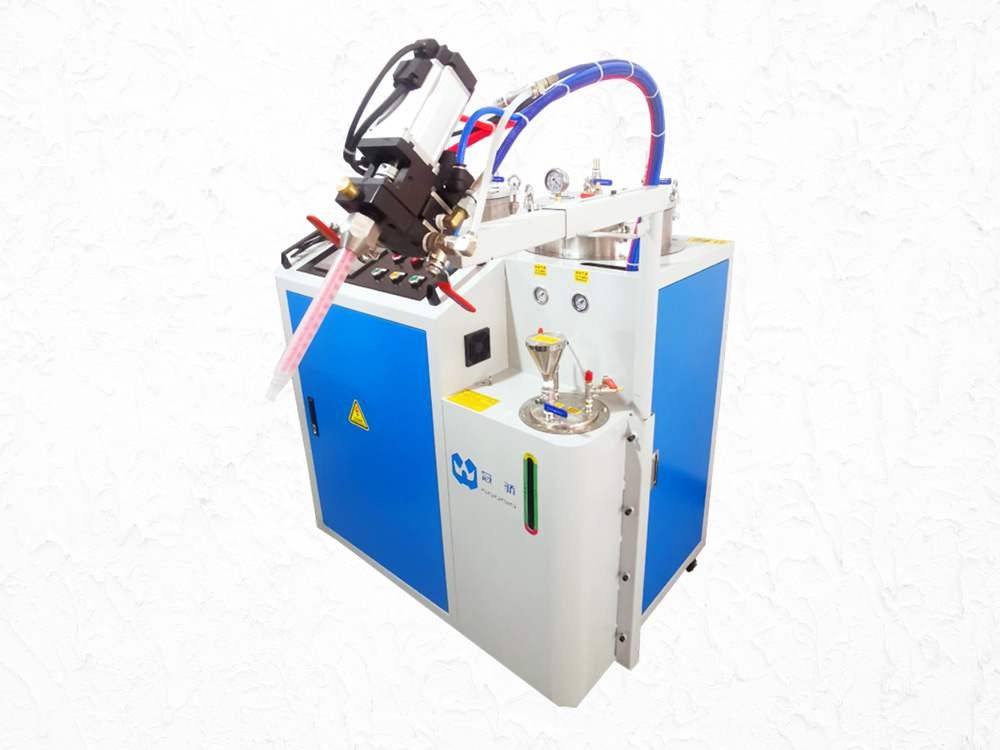
Key Configuration Choices
Metering Pumps – The Filler Makes the Difference
For unfilled or lightly filled PU systems, gear pumps deliver excellent accuracy and long service life.
For highly filled resins (containing alumina, silica, or other abrasives), progressive cavity pumps are essential. Gear pumps wear quickly under abrasive conditions, causing ratio drift within months.
Mixing Method – Viscosity and Pot Life Determine the Choice
Low-viscosity systems with ample pot life work well with static mixers—cost-effective, disposable, and eliminate the need for cleaning.
High-viscosity or fast-curing systems (pot life under a few minutes) require dynamic mixing. The motor-driven mixing element provides intensive shearing, but the mixing head must be cleaned immediately after each shot—automated flushing is critical to prevent costly damage.
Temperature Control – Cooling Matters as Much as Heating
PU viscosity varies significantly between summer and winter conditions. An effective system must support both heating and cooling—typically via a recirculating chiller—to maintain the set temperature within ±2°C. Heating-only systems often struggle during hot weather.
Vacuum Degassing – Application-Dependent
For high-voltage electrical components, optical devices, or thick-section potting, vacuum degassing is non-negotiable—trapped air bubbles compromise dielectric strength and optical clarity.
For simpler applications like LED strip encapsulation or basic module sealing, degassing may be optional.
Common Pitfalls to Avoid
Automated Cleaning Is Not a Luxury – It’s a Necessity
PU begins crosslinking as soon as the two components meet. Static mixer nozzles are disposable, so cleanup is trivial. But dynamic mixing heads represent a significant investment—without built-in high-pressure atomized cleaning, operators must disassemble and scrub the head after every run, consuming time and exposing staff to solvents. A properly configured system completes the flush in seconds, enabling uninterrupted production.
Accuracy Is About Long-Term Stability, Not Just Initial Specs
Many machines perform well out of the box but drift after six months as seals wear and pump clearances widen. Invest in proven metering components (servo motors, quality pumps) and verify that replacement parts are readily available.
What to Confirm Before Requesting a Quote
Instead of asking for pricing right away, gather these details—they determine the right system design:
Specific resin system and grade (manufacturer data sheet available?)
Mixing ratio by weight (A:B) — is it 1:1 or 10:1?
Does the resin contain fillers? Approximate percentage?
Shot size per part and daily production volume?
Vacuum or special process requirements?
The most reliable approach: bring your actual parts and materials to run trial samples. Real-world testing reveals more than any specification sheet.