


Metering System for Dispensing Machines: Gear Pump vs. Screw Pump
2026-05-12 17:16:35In dispensing machine metering systems, both gear pumps and screw pumps are positive displacement pumps. However, they differ significantly in structure, applicable materials, and performance. Choosing the right pump type depends on matching the fluid properties and process requirements.
Key Differences
| Feature | Gear Pump | Screw Pump |
|---|---|---|
| Working Principle | Uses intermeshing gears to transfer fluid via changing cavity volumes | Uses a rotor (screw) and stator to move fluid through axial sealing cavities |
| Suitable Materials | Low viscosity, unfilled or lightly filled fluids | High viscosity, fluids containing fine fillers/particles |
| Metering Accuracy | Error approx. 0.6% – 3% | Error approx. 2% – 3% |
| Output Pulsation | Some pulsation | Very low pulsation, smooth output |
| Abrasion Resistance | Poor (fillers accelerate wear) | Good (stator is the main wearable part) |
| Cost | Lower | Higher |
| Maintenance | Simple but difficult to repair once worn | Regular stator replacement is straightforward |
1. Working Principle
Gear Pump
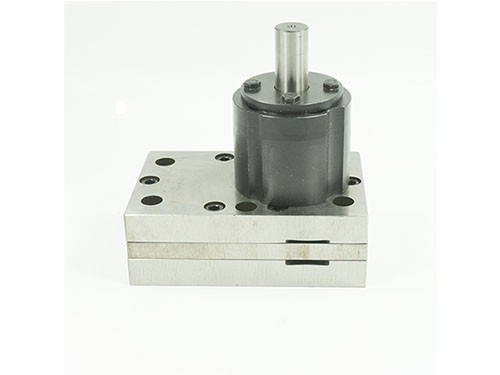
A pair of intermeshing gears rotate inside a tight housing. Fluid is trapped in the cavities between gear teeth, carried from the inlet to the outlet, and then displaced as the teeth mesh. The clearances are at the micron level (approx. 1–2 µm), requiring high precision manufacturing.
Screw Pump (Progressive Cavity Pump)
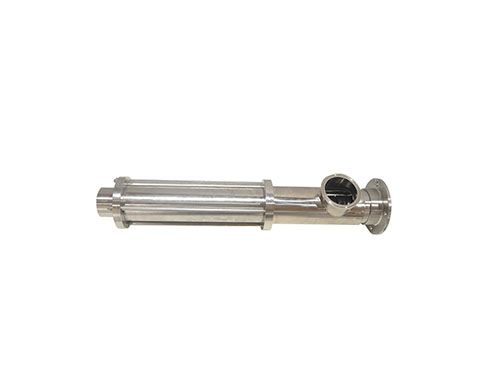
A single helical rotor (screw) rotates inside an elastomeric stator (usually rubber). The rotor and stator form continuously moving sealed cavities, which smoothly push fluid from the inlet to the outlet without aggressive shear or agitation.
2. Applicable Fluids – The Core Selection Criterion
Gear Pump – Suitable for low-viscosity, particle-free fluids, such as unfilled epoxy, PU, silicone, etc. If the fluid contains hard particles, they will rapidly wear down the gears – like “putting sand into a gearbox”. Precision will drop quickly, and the pump may be damaged.
Screw Pump – Suitable for high-viscosity, filler-containing fluids. Even if the fluid contains fine particulate fillers (e.g., thermal conductive fillers), a screw pump can handle them reliably. This is the main advantage over gear pumps.
Viscosity guideline (based on industry experience):
<10,000 cP → Gear pump preferred
~50,000 cP or with fillers → Screw pump preferred
3. Accuracy & Stability
Metering accuracy – Gear pumps generally offer higher accuracy; dosage error can be as low as 0.6%–3%. Screw pumps are slightly lower or comparable, typically 2%–3%.
Output stability (pulsation) – Screw pumps produce almost pulsation-free flow and pressure, which benefits consistent dispensing. Gear pumps exhibit some pulsation due to gear meshing.
Fluid adaptability – Screw pump performance is less affected by changes in viscosity or density. Gear pump accuracy can drift due to viscosity variations or gradual mechanical wear.
4. Durability & Maintenance
Wear & lifetime – When pumping filled fluids, gear teeth wear progressively. Some manufacturers note that even minor wear can accumulate, potentially altering the mixing ratio. Screw pumps are more wear‑resistant when handling fillers; the stator is the primary wearing part.
Maintenance difficulty & cost – Gear pumps are compact and less expensive initially, but once worn, they are rarely repairable. Screw pumps are easier to maintain – in most cases, simply replacing the rubber stator restores performance, and stator material is relatively low cost.
Summary: Which One to Choose?
Choose a Gear Pump when:
The fluid is clean, unfilled, low‑viscosity (e.g., <10,000 cP)
High metering accuracy is critical
Cost control is important
Typical applications: LED encapsulation, PCB coating, etc.
Choose a Screw Pump when:
The fluid contains fillers (e.g., thermally conductive or flame‑retardant fillers)
Viscosity is high (e.g., >50,000 cP)
The fluid has complex rheological behavior
Typical applications: potting of power modules, automotive electronics requiring high reliability, thermal interface materials
Note – Gear pumps are also different from piston pumps. Piston pumps are suitable for very high viscosity, highly filled, large‑volume applications, but they are more expensive and less precise for small flow rates.