


Silicone Bionic Infusion System: The Precision Engine for Hyper-Realistic Prosthetics
2026-01-26 13:56:13The Silicone Bionic Infusion System is a specialized machine designed for manufacturing high-end silicone prosthetics. Its primary applications include creating ultra-realistic robot skin, film/TV special effects models, and medical training manikins. The system precisely injects liquid silicone into molds to produce flexible, multi-layered components that closely mimic human tissue. Compared to traditional manual methods, it delivers bubble-free products with superior consistency and significantly higher production efficiency.
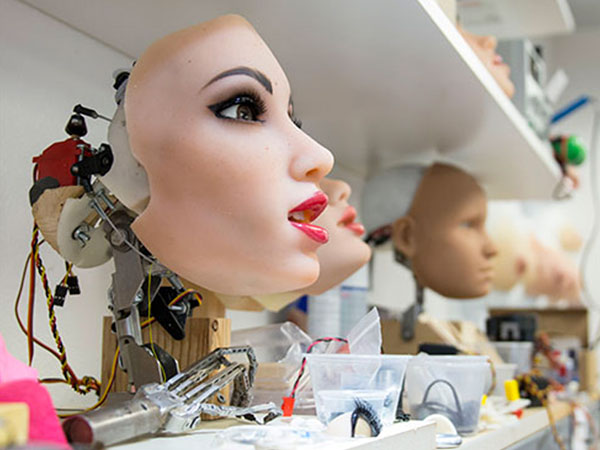
Core Function
In essence, this machine functions as a high-precision, automated silicone casting system. Its primary task is to inject viscous, liquid silicone resin into molds to create highly detailed artificial body parts—such as heads, hands, and torsos—with exceptional accuracy and repeatability.
Key Features:
Vacuum Processing: The entire injection process can occur within a vacuum chamber, eliminating trapped air bubbles to produce transparent, void-free components with optimal mechanical strength.
Precision Metering & Mixing: The system dispenses silicone base and catalyst in exact ratios, ensuring consistent cure profiles and material properties across all production batches.
Programmable Automation: Operated via computer-controlled programs, it allows for precise setting and replication of injection parameters like speed, volume, and sequence, guaranteeing stable and repeatable outcomes.
How It Works (Simplified Process)
Mold Preparation: A negative mold is created based on 3D scan data, forming a hollow cavity that defines the final prosthetic's shape and surface detail.
Deaeration & Mixing: Silicone components are vacuum-degassed to remove air, then precisely metered and homogenized via a static mixer. The mixed material undergoes a final deaeration cycle to ensure it is completely bubble-free prior to injection.
Injection & Layering: The prepared silicone is injected into the mold cavity, typically from the lowest point, allowing it to fill intricate details gradually without trapping air. For multi-layer structures mimicking skin, fat, and muscle, the system can sequentially inject silicones of different colors and durometers (hardness).
Curing & Finishing: After injection, the silicone is heat-cured within the mold. The cured component is then demolded, trimmed, and undergoes surface finishing—including painting, pore texturing, and hair implantation—to achieve its final hyper-realistic appearance.
Advantages Over Manual Fabrication
Superior Consistency: Automated production ensures every unit meets identical specifications, eliminating human variance.
Complex Geometries: Enables fabrication of advanced structures with integrated skeletons, internal channels, or layered tissue simulations that are difficult or impossible to achieve by hand.
Elimination of Defects: The vacuum process virtually eliminates bubbles and inclusions, resulting in flawless components.
Increased Efficiency & Material Optimization: Significantly faster than manual layering techniques, suitable for small-batch production, and reduces material waste through precise dispensing.
Primary Applications
Film & Theme Parks: Creating special effects prosthetics, creature suits, animatronic skins, and lifelike figures.
Medical Simulation: Producing high-fidelity surgical training models, patient simulators, and anatomical replicas for procedural practice.
Advanced Robotics: Developing realistic, compliant "skin" for humanoid and companion robots, enhancing human-robot interaction.
Art & Sculpture: Fabricating hyper-realistic figurative art and displays.
Conclusion
The Silicone Bionic Infusion System is an enabling technology that makes "indistinguishable from real" prosthetics a practical reality. By automating and refining the casting process, it solves core challenges of manual fabrication—inconsistency, bubbles, and low throughput. While a specialized and significant investment, it has become an essential tool for creating premium prosthetic devices, driving innovation in fields ranging from entertainment and medicine to robotics and beyond.