


How to Choose a Vacuum Potting System: A 4-Step Selection Guide
2026-01-13 16:22:31Selecting a vacuum potting system is a critical decision for manufacturers in demanding fields like electric vehicles, high-power electronics, and aerospace. The right system is defined not by price alone, but by a precise match to your application's requirements. Use this four-step framework to evaluate your options and make a confident investment.
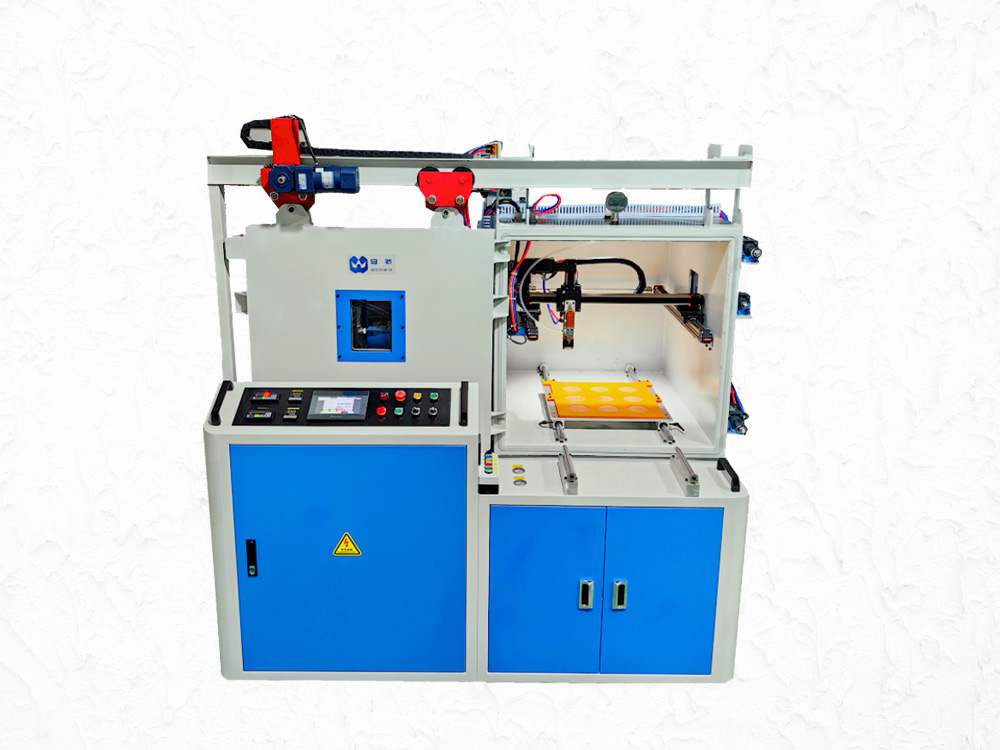
1. Define Your Core Need: How "Empty" Does Your Vacuum Need to Be?
The required vacuum level is the starting point and is driven by your product's performance criteria. Higher isn't always better—it must be appropriate.
For General Void Reduction: If the goal is to eliminate the majority of air bubbles from standard electronic potting, a system capable of achieving a medium vacuum range, typically around 100 to 500 Pa (Pascal), is often sufficient and cost-effective.
For High-Reliability / Zero-Void Encapsulation: For potting high-voltage components (IGBTs, transformers), optical devices, or any product where internal porosity is unacceptable, you need a system with a high vacuum capability. Look for equipment that can reach 10 Pa or lowerto ensure maximum material density and electrical integrity.
2. Evaluate the Core System Components: The Critical Sub-Systems
Examine the technical specifications of these fundamental parts:
The Vacuum System & Chamber: The type of vacuum pump (e.g., rotary vane, roots combination) and its pumping speed determine how quicklyyou can reach the target vacuum level, impacting cycle time. The chamber must fit your largest product and feature robust, reliable sealing.
Metering and Mixing System: Precision is paramount. Under vacuum, even small metering errors are magnified. Prioritize systems with high-accuracy pumps (e.g., ±1% or better). For filled materials like epoxy, a wear-resistant progressing cavity (PC) pumpis superior. Ensure the mixer operates reliably in a vacuum or low-pressure environment.
Dispensing and Pressure Control: The system should offer flexible process control, allowing dispensing under maintained vacuum, during controlled pressure recovery, or under positive pressure. This adaptability is key to perfect mold filling and fiber wet-out in composites.
3. Assess Automation and Production Efficiency
Automation Level: Determine what fits your throughput: manual (lowest cost), semi-automatic, or fully automatic. Fully automatic systems with integrated robotics and vision alignmentdeliver superior consistency for volume production.
Chamber Design and Workflow: A single-chambersystem is simpler but creates production downtime. A dual-chamber or multi-stationdesign enables a continuous workflow (e.g., loading/evacuating one chamber while potting in another), dramatically boosting throughput.
4. Consider Long-Term Reliability and Supplier Partnership
System Durability: The brand and quality of core components (pumps, sensors, valves) are the best indicators of long-term uptime and low maintenance costs.
Process Engineering Support: The most critical factor may be the supplier's expertise. Choose a partner who understands your specific material and process challengesand can provide application testing and parameter optimizationsupport.
Service and Support Network: Evaluate the supplier's local presence, spare parts availability, and technical support response time to ensure minimal production disruption.
The Bottom Line: Treat this as a capital project. Clearly define your quality targets (vacuum level), material specs, and output needs. Use these to benchmark the technical capabilities, automation fit, and engineering supportof potential suppliers. Before finalizing your decision, insist on a live demonstration using your actual materials and a representative part. This hands-on test is the ultimate proof of a system's suitability for your production.